
You buy a pair of waterproof Bluetooth headphones, step into the pool, and the music dies three strokes in. The buds are wet-rated. The phone is in a dry bag. The connection still drops. That is not a defective product—it is physics. Water absorbs and reflects the 2.4 GHz radio Bluetooth uses, so the link that works on a run or in the gym does not survive a real swim.
This guide explains why Bluetooth fails underwater, then compares what swimmers and coaches actually use instead: offline MP3 bone conduction (the Shokz-style idea, made for swimming), poolside FM transmitter kits (Tayogo T6 + receivers), and dedicated coach voice systems like the T8. Soft product links point to tayogo.com—Swim with Music. Train with Sound.—without pretending every swimmer needs the same kit.
Why Bluetooth dies in the water (brief physics)
Bluetooth Classic and BLE ride the 2.4 GHz ISM band. Those wavelengths interact poorly with water:
- Absorption. Water molecules soak up energy at microwave frequencies. A few centimeters of pool water can attenuate the signal enough to break pairing.
- Reflection and multipath. The air–water boundary and the concrete walls of a natatorium scramble what little energy remains.
- Phone-on-deck geometry. Even if the headset is IPX8, the phone must stay dry. The radio path still crosses water between ear and deck bag.
Marketing that says “waterproof Bluetooth swimming headphones” usually means: the hardware survives immersion, and Bluetooth works above water (warm-up, dryland, open-water surface swimming with the phone close). It does not mean a stable phone stream while you are a meter under a lane line.
SEO takeaway searchers care about: waterproof ≠ underwater Bluetooth stream. For submerged training, choose a path that does not depend on 2.4 GHz through water.
Option 1: Offline MP3 bone conduction (Shokz-style, swim-ready)

Many swimmers first meet bone conduction through brands like Shokz on land: open-ear transducers, ambient awareness, no sealed earbud tip. Underwater, the useful twist is not Bluetooth—it is stored music.
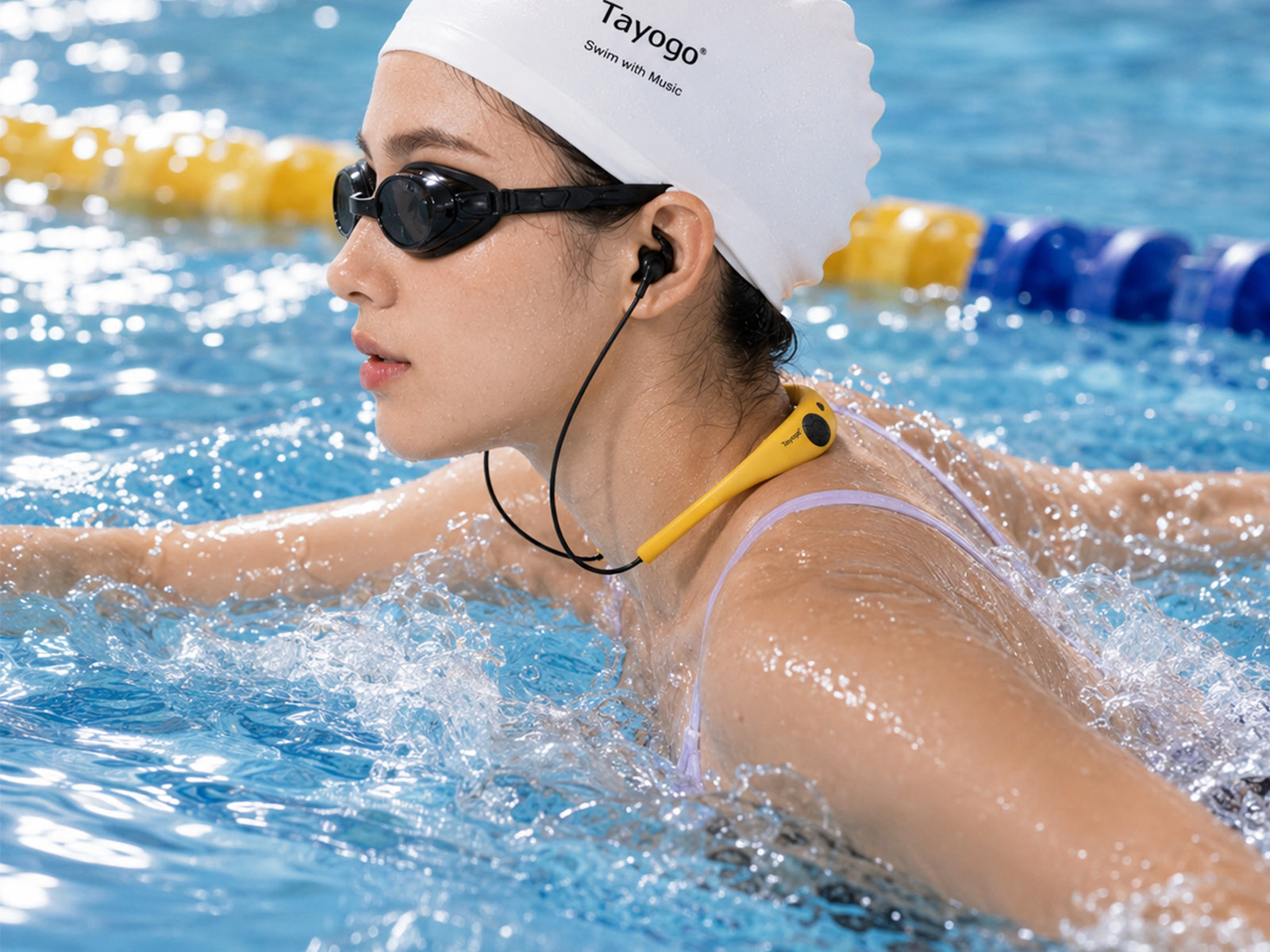
How it works: Load MP3/AAC (or similar) onto an onboard player. Wear a waterproof bone-conduction or in-ear swim headset. Play from memory. No phone link required mid-set.
Best for: Lap swimmers, open-water athletes who pre-load playlists, and anyone who wants a simple personal soundtrack without a deck transmitter.
Honest limits:
- You manage files (or a companion app) instead of live Spotify.
- You cannot share one track across a whole artistic team from one phone without a broadcast system.
- Some models still offer Bluetooth for land use—treat that as above-water convenience, not the underwater plan.
Tayogo’s swim lineup includes bone-conduction models such as the W25 WaveCom (Bluetooth + FM + receiver modes) and offline-leaning players in the W-series. Compare storage, waterproof rating, and whether you need a receiver mode for a future FM kit.
Option 2: Poolside FM transmitter kits (phone audio without underwater Bluetooth)

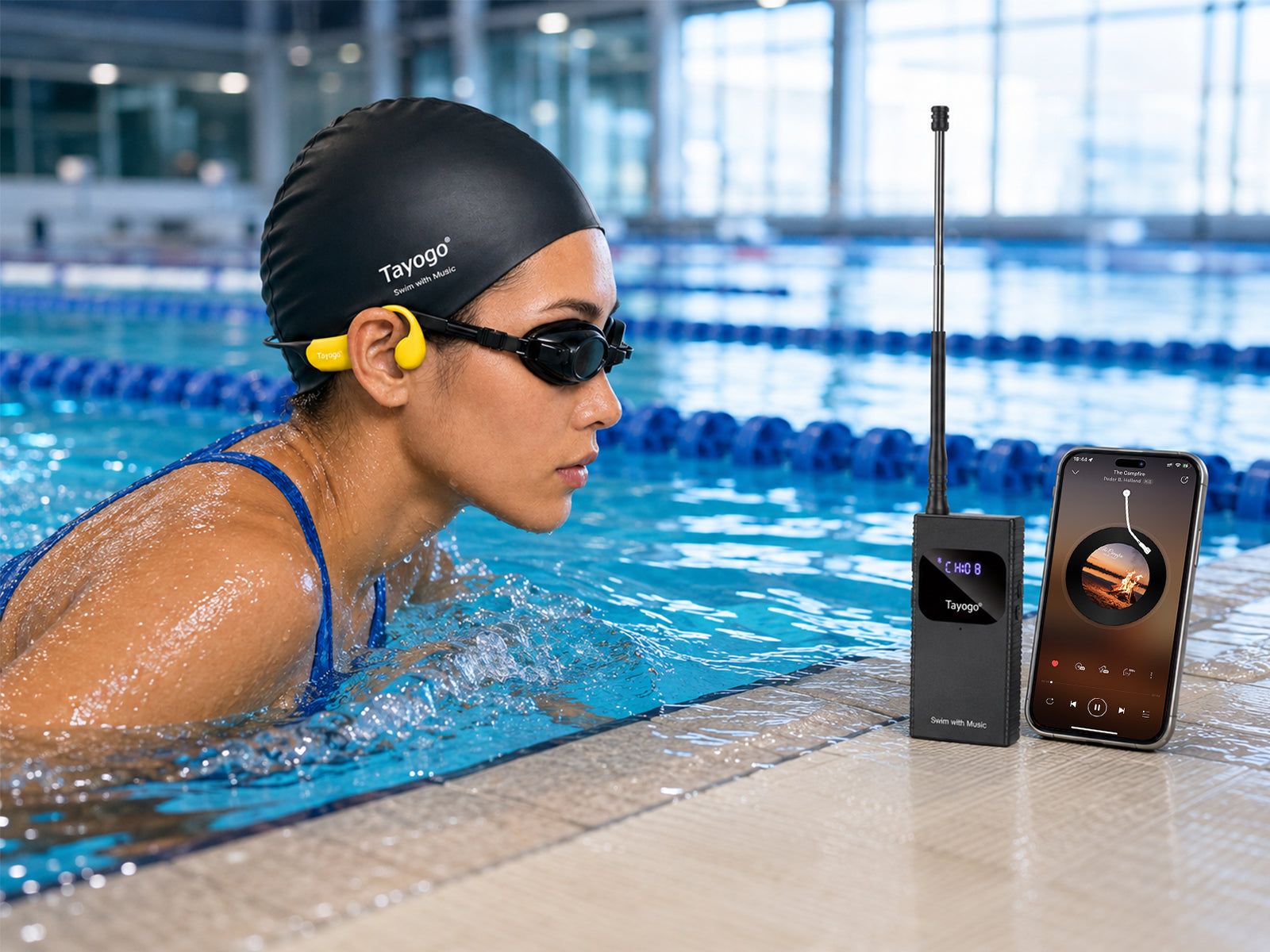
When swimmers want Spotify, Audible, Apple Music, or a coach mic without stuffing files onto every headset, clubs and serious amateurs use a poolside FM path:
- Keep the phone (and transmitter) dry on deck.
- Connect phone → transmitter (often Bluetooth above water).
- Transmitter broadcasts on an FM channel.
- Athletes wear waterproof receivers (bone conduction or in-ear) in Receiver / FM mode.
Water still attenuates radio—but FM swim systems are designed as short-range deck-to-pool links, not as phone-to-ear Bluetooth through the water column. Range claims are usually open-air maximums; always test in your facility.
Tayogo T6 + receivers (Zygo-category alternative)

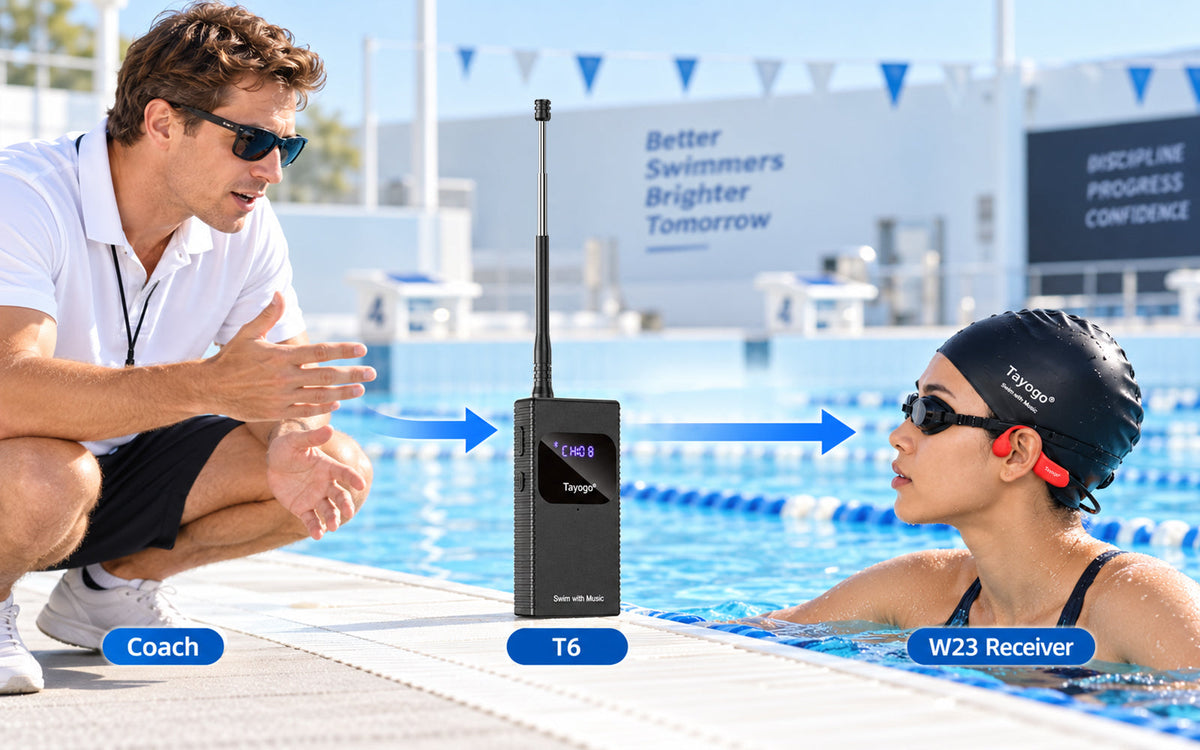
The Tayogo T6 StreamPort is a poolside FM transmitter for swimming audio and coaching. Pair it with W-series receivers:
- Music combos such as T6 + W23 Stream Swimming Headphones — phone audio for Spotify / Audible style listening while you swim.
- Coach communicator kits such as T6 + W23 Swim Coach Communicator — voice-forward setups for mid-set cues.
- In-ear options (e.g. T6 + W18) if you prefer sealed tips over open-ear bone conduction.
This category overlaps what many coaches describe when they compare Zygo-style underwater coaching / audio systems: dry transmitter, waterproof receivers, shared channel. Tayogo’s pitch is practical kits you can scale—not a claim that FM is magic underwater Wi-Fi.
Best for: Swimmers who refuse to abandon streaming apps; small groups sharing one phone playlist; coaches who want music and occasional mic cues at pool scale.
Option 3: Coach voice first — Tayogo T8

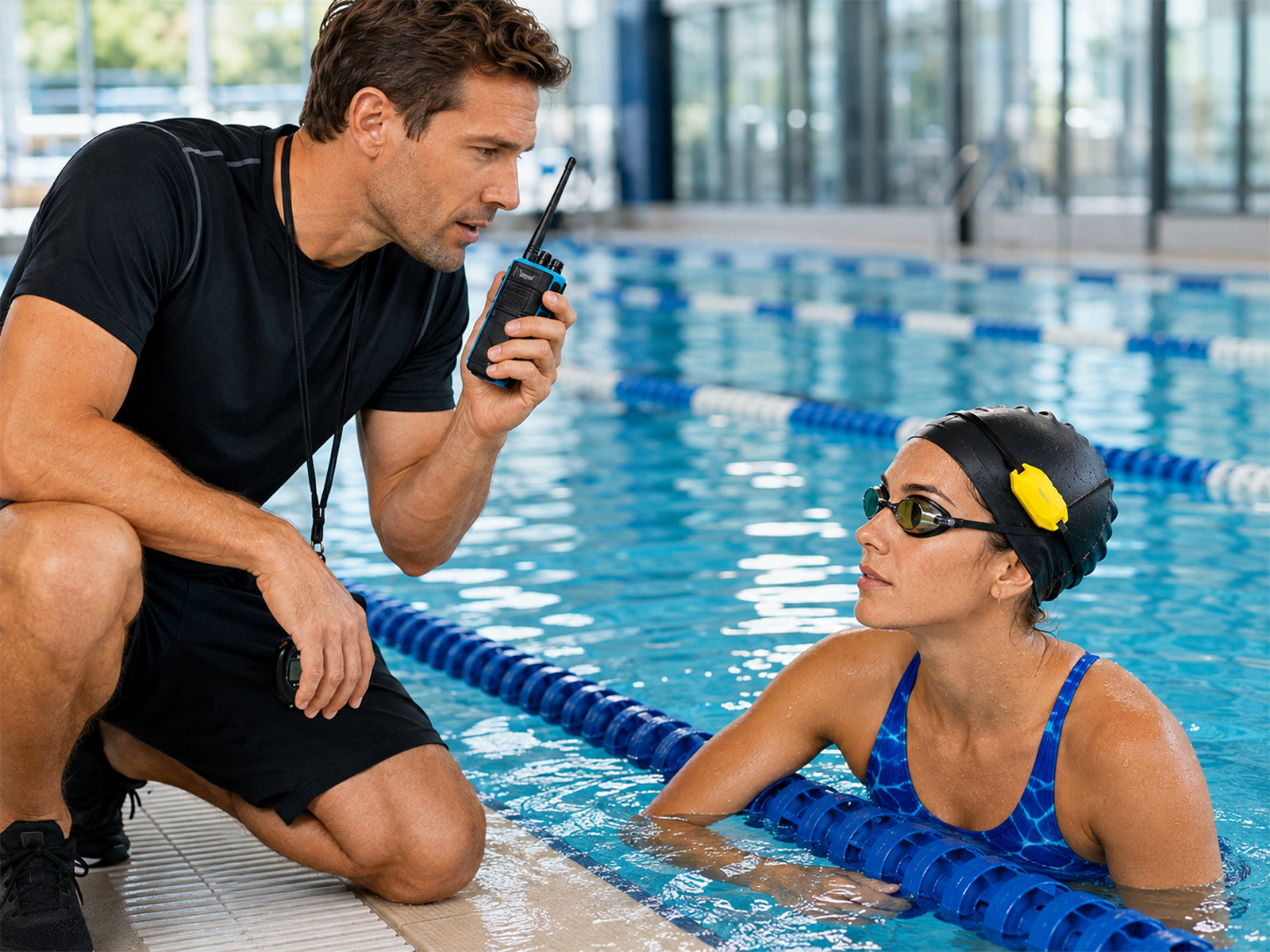
If the problem is “athletes cannot hear me,” not “I need a playlist,” choose a voice-first system.
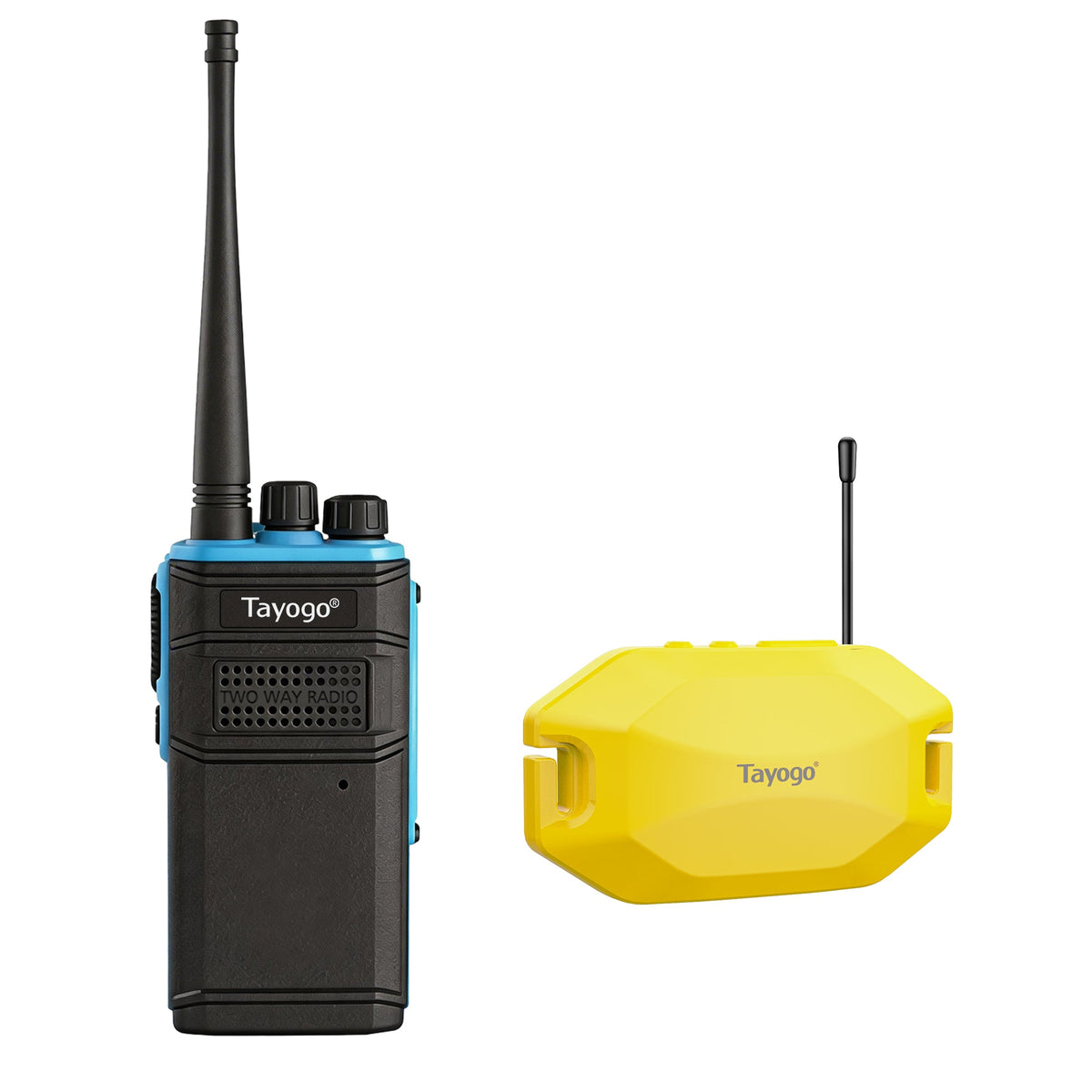
The T8 + W24T Swim Coach Communicator uses a dry T8 walkie-style transmitter and waterproof W24T receivers. It is optimized for long-range coach voice (open-condition figures are product-guidance maxima, not guarantees in a concrete pool). It does not stream Spotify underwater.
Best for: Age-group clubs, private lessons, open-water direction cues, multi-lane facilities using separate channels.
Skip T8 if: Your primary need is routine music or phone streaming—look at T6 music / artistic kits instead.
Brief note: artistic swimming (T6 + W23 music + coach)

Artistic (synchronized) swimming needs one shared track plus live counts. Clubs often mix phone music and a coach mic on a T6, then send that feed to every W23 on the same channel. See Tayogo’s artistic music-and-coach mixer pages when routines—not solo playlists—are the job. Bluetooth still stays on deck; athletes hear FM underwater.
Quick compare: pick by job, not by buzzword
| Job | Better fit | Avoid assuming |
|---|---|---|
| Personal offline playlist | MP3 bone conduction / swim MP3 | Phone Bluetooth mid-lap |
| Spotify / Audible while swimming | T6 + receiver combo (FM) | “Waterproof Bluetooth” as underwater stream |
| Mid-set stroke cues, long spacing | T8 + W24T voice system | Music-only MP3 |
| Artistic routine + coach counts | T6 artistic / music+mic mixer | One loaded MP3 per athlete |
Soft next step
Swim with Music. Train with Sound. Start from the pain you actually have:
- Explore swimming headphones and combos on tayogo.com
- T6 transmitter: /products/t6
- Stream combo: T6 + W23 Stream
- Coach voice: T8 + W24T
Test any radio system in your water before you buy for a whole squad. Open-air range numbers are guidance, not a substitute for a lane-line check.
FAQ
Do any Bluetooth headphones work underwater?
Some survive immersion and reconnect at the wall. Stable phone streaming through water at 2.4 GHz is unreliable. Plan for offline storage or a deck FM / coach radio path for submerged training.
Are bone conduction headphones better underwater?
Bone conduction helps with open-ear comfort and coach voice clarity; waterproofing and how audio is delivered (MP3 vs FM vs walkie) matter more than the transducer style alone.
Is FM safer than Bluetooth in a pool?
They solve different problems. FM swim kits keep the phone dry and use a transmitter–receiver design aimed at poolside range. Bluetooth is excellent on land and weak through water. Follow local rules for radio gear and keep transmitters dry.
Can I use Shokz OpenSwim-style gear and a Tayogo T6 together?
Personal MP3 bone conduction and a T6 team FM kit are complementary categories. Match the headset’s receiver/FM mode (if required) to the transmitter you buy; read the product page for compatibility.