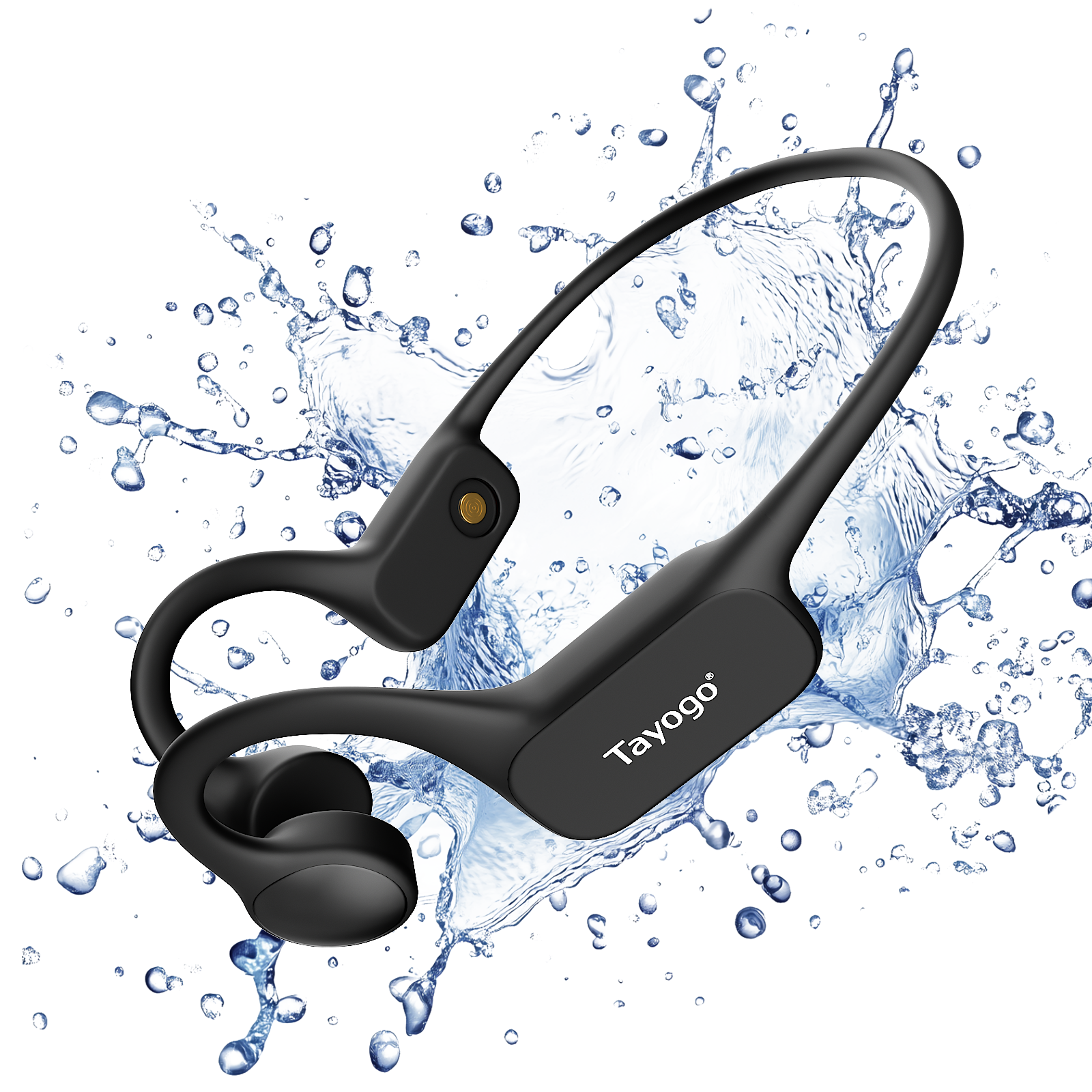
Waterproof bone-conduction headphones let swimmers hear music without placing a speaker deep inside the ear canal. Instead, transducers rest near the cheekbones and send vibrations through bone to the inner ear. This guide explains how the technology behaves in water and which current Tayogo model fits each use case.
How bone conduction works while swimming
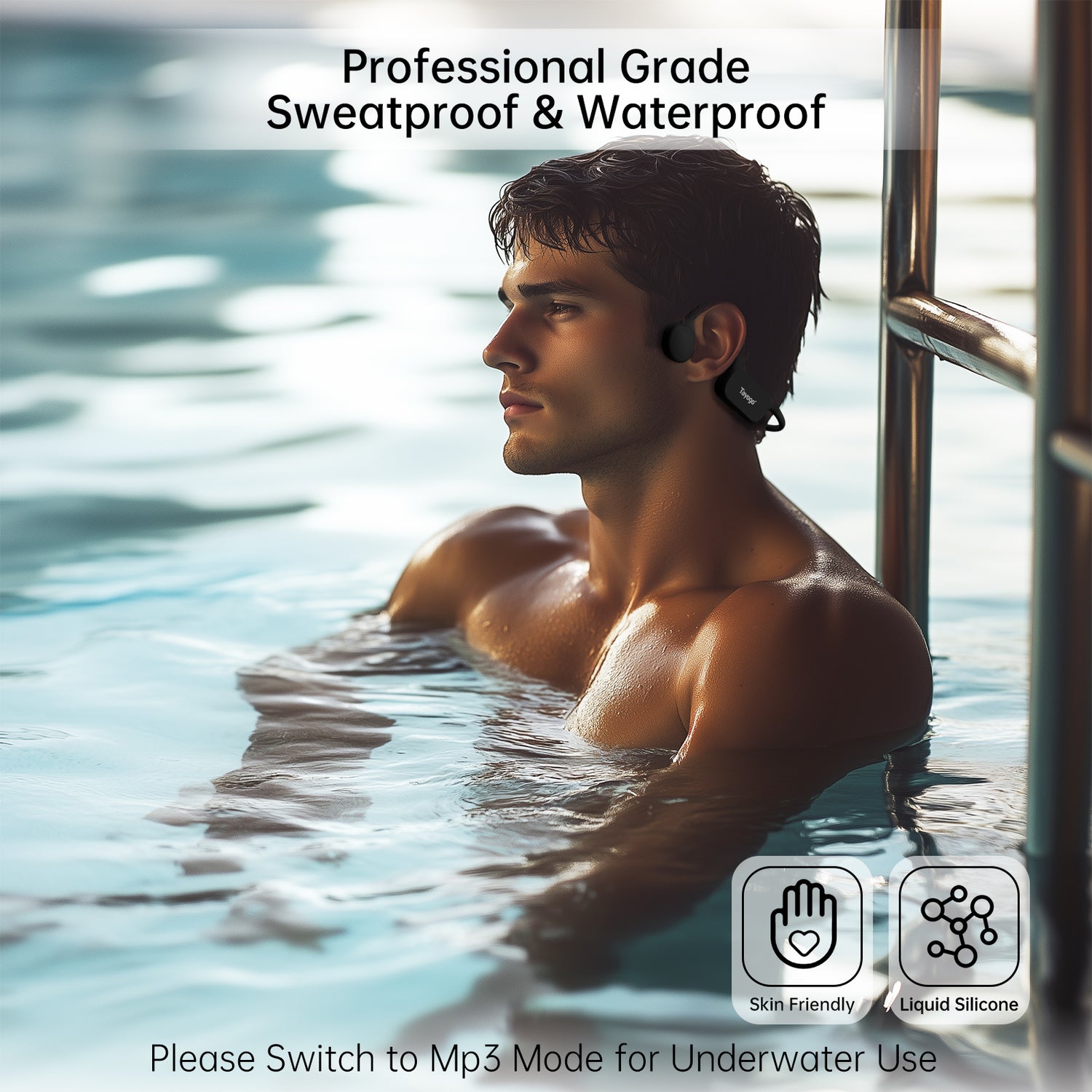
Bone conduction bypasses the outer ear, so the headset can remain stable while your ears are exposed to the water. Underwater sound can feel different from sound on land. Using the supplied earplugs often reduces water noise and improves clarity and bass.
For a deeper explanation, read How Bone Conduction Headphones Work.
Bluetooth, MP3 and receiving are different functions
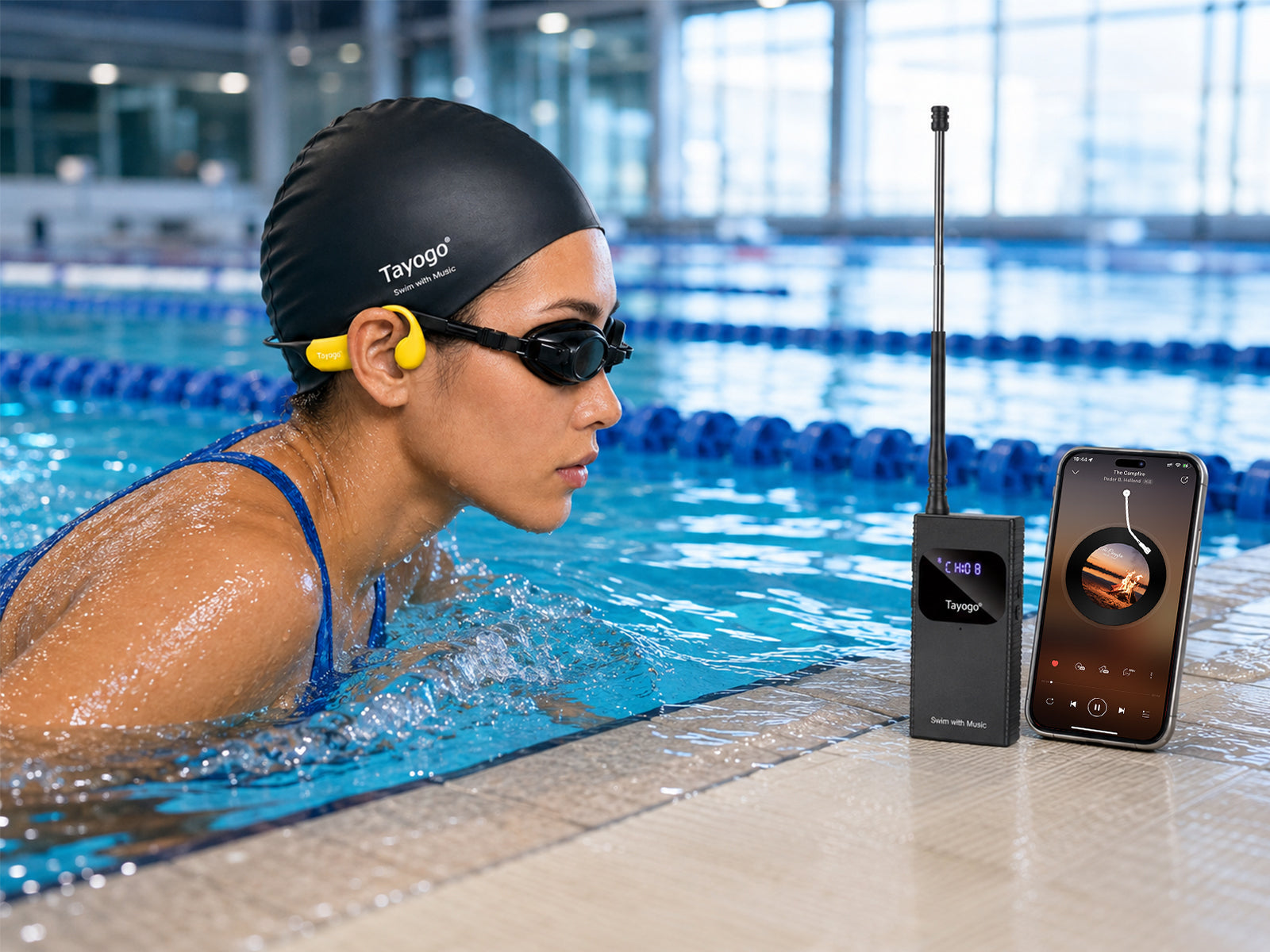
Bluetooth is useful on land, but its 2.4 GHz signal does not travel reliably through water. While swimming, use either built-in MP3 playback or a compatible receiver connected to the Tayogo T6 streaming transmitter.
- MP3 playback: music files are stored in the headphones, so no phone connection is required.
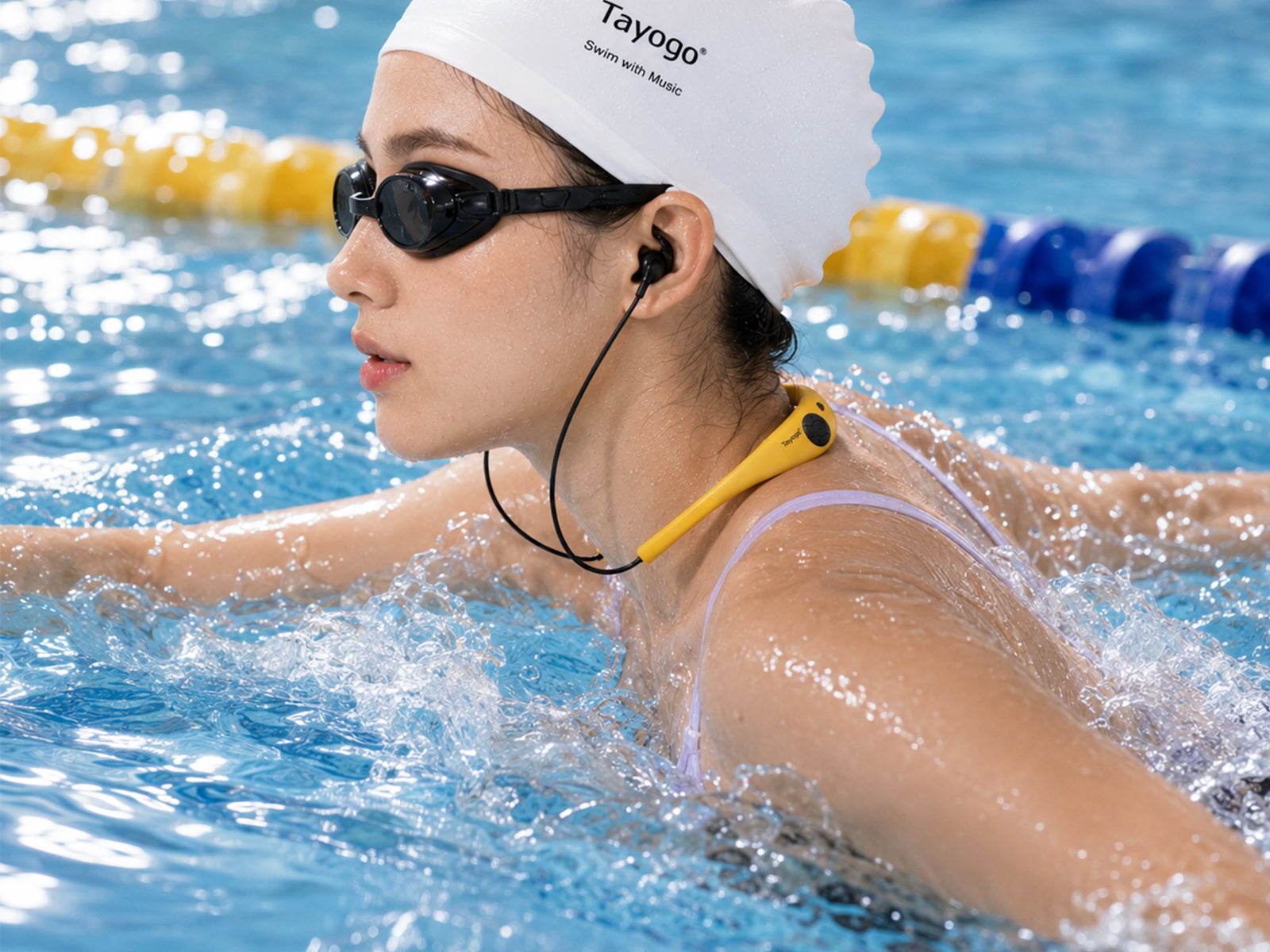
- T6 receiving: the dry T6 receives audio from your phone and sends it by FM to compatible swimming headphones.
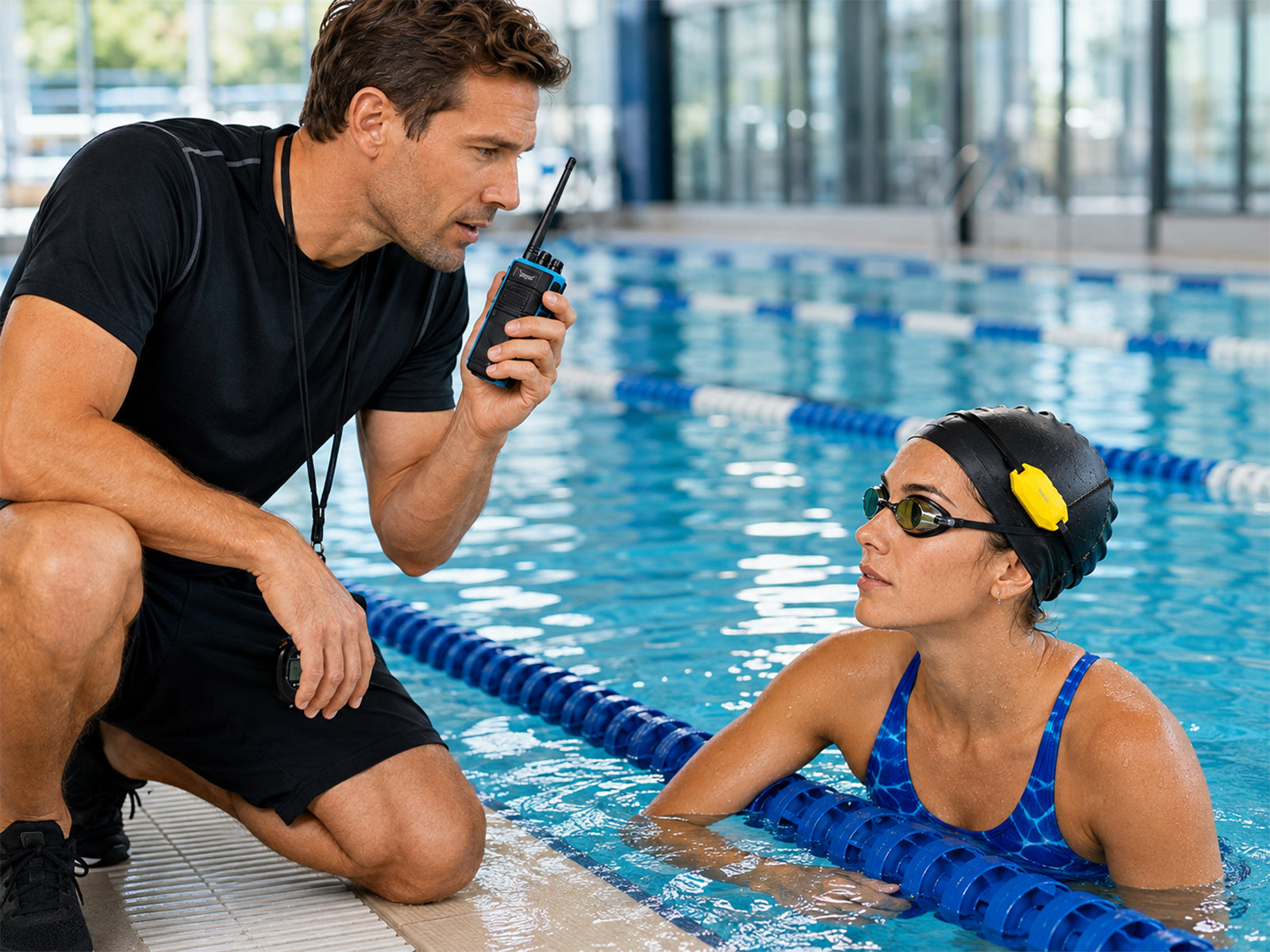
- T8 coach communication: a separate real-time coaching system used with compatible receivers such as W24T.
Current Tayogo bone-conduction models
- W23: Bluetooth + FM + receiving, without built-in MP3. It is offered through current T6 Swim Music Combo options.
- Standalone W24: 32GB memory + Bluetooth + FM + receiving. The W24 supplied in a T6 Swim Combo has no built-in memory and receives streamed audio from T6.
- W25: Bluetooth + receiving, without built-in MP3. A focused choice for T6 streaming.
- W26: 32GB MP3 + Bluetooth, without the receiving function. Best for swimmers who use downloaded files.
- W24T: Bluetooth + FM and real-time coach receiving for the Tayogo T8 swim coaching system.
Which model should you choose?
- Choose the standalone W24 when you need 32GB local playback; choose T6 + W24 for streamed audio without built-in memory.
- For live phone audio through T6 without internal MP3 storage, choose W23 or W25.
- For stored MP3 music without T6 streaming, choose W26.
- For real-time coach instructions, choose the T8 + W24T coaching system.
Fit, sound and maintenance
- Position the transducers flat against the cheekbones, just in front of the ears.
- Use earplugs during swimming if you want less water noise and fuller perceived sound.
- Rinse the headset with fresh water after pool or open-water use.
- Dry the charging contacts fully before charging.
- Check the product's stated depth and use limits before every session.
Explore Tayogo bone-conduction headphones or compare T6 Swim Music Combos.