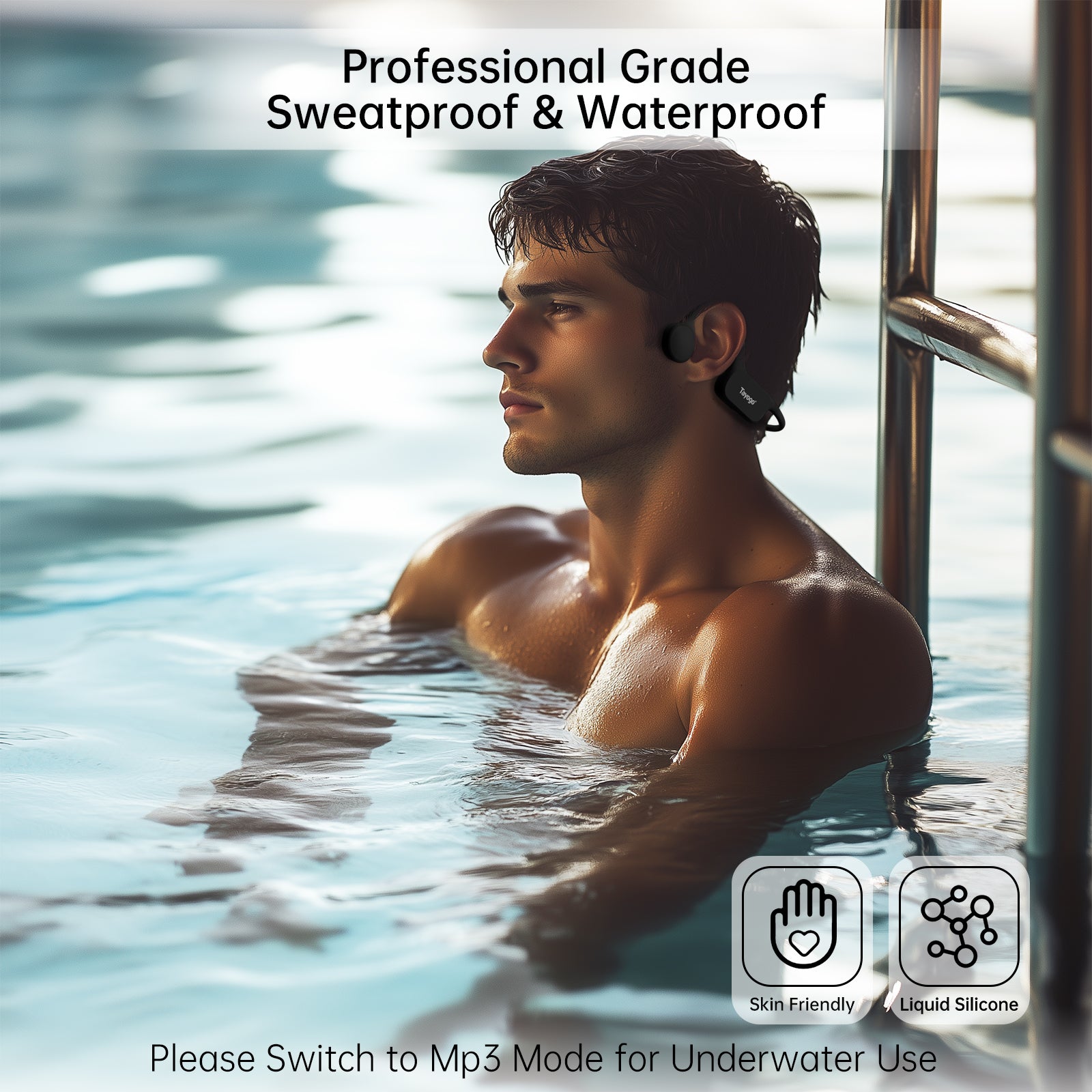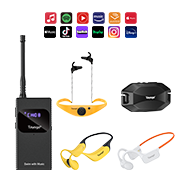
Swimming with music can make long sets more enjoyable, but ordinary Bluetooth earbuds are not designed for underwater use. This guide explains the two reliable ways to listen in the pool and helps you choose the right Tayogo swimming headphones.
Why ordinary Bluetooth headphones stop working underwater
Water absorbs 2.4 GHz Bluetooth signals very quickly. A phone on the pool deck cannot maintain a normal Bluetooth connection directly to headphones below the surface. For dependable swimming audio, use either music stored in the headphones or a Tayogo T6 transmitter system.
Choose your listening method
1. Built-in MP3 for simple, cable-free swimming
Load audio files before your workout and play them directly from the headphones. This is the simplest option when you do not need live Spotify, Audible, Amazon Music or other phone audio.
- Standalone W18: an in-ear waterproof swimming headset with 32GB built-in memory. The W18 supplied in a T6 Swim Combo has no built-in memory and uses T6 streaming.
- Standalone W24: bone-conduction design with 32GB built-in memory, Bluetooth, FM and receiving functions. The W24 supplied in a T6 Swim Combo has no built-in memory and uses T6 streaming.
- W26: bone-conduction design with 32GB MP3 and Bluetooth for swimmers who do not need the T6 receiving function.
2. T6 streaming for Spotify and other phone audio
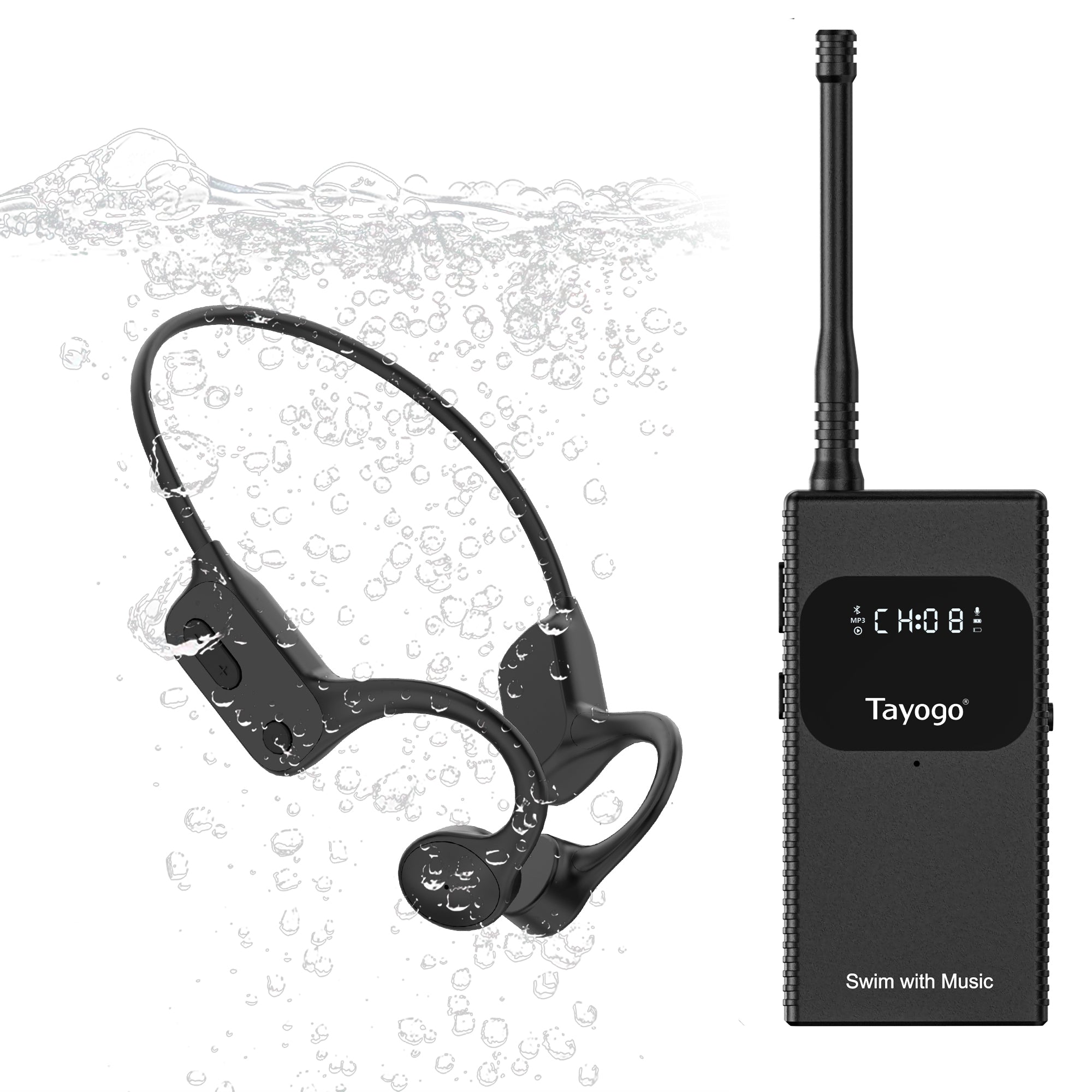
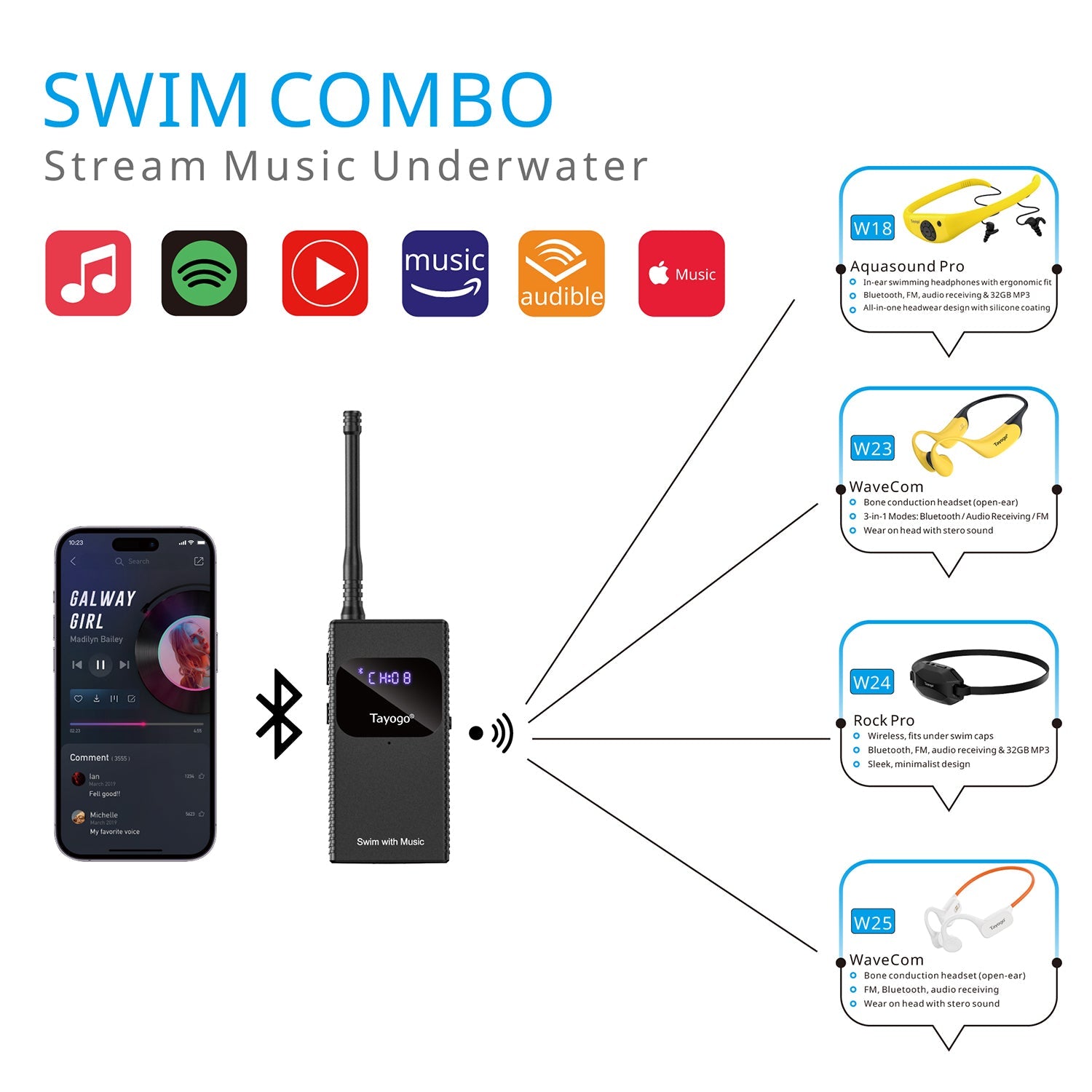
The T6 stays dry beside the pool. It receives Bluetooth audio from your phone and transmits it by FM to a compatible Tayogo receiver. This makes it possible to hear live audio from Spotify, Audible, Amazon Music, YouTube and other apps while swimming.
In-ear or bone conduction?
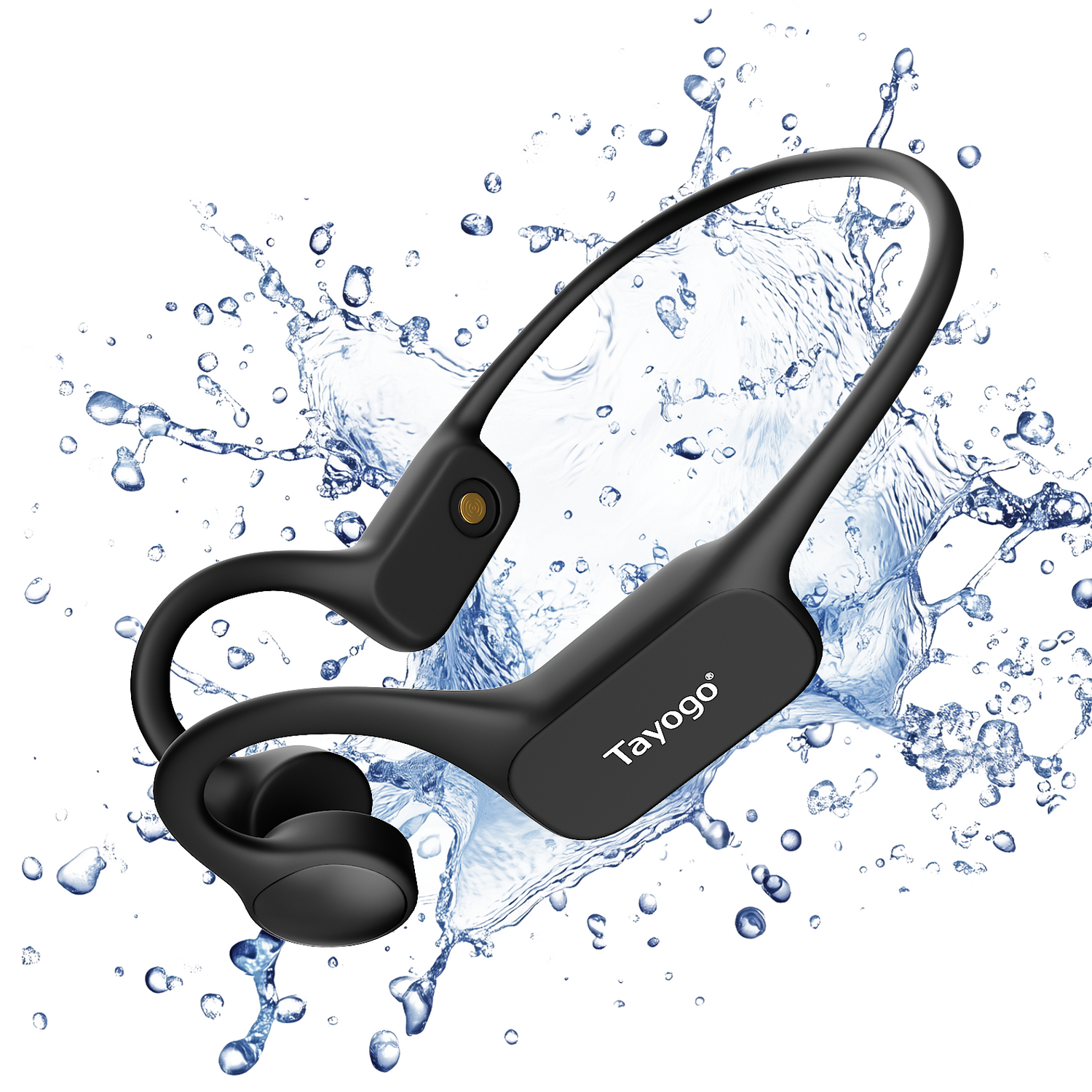
In-ear headphones such as W18 can provide a direct, immersive sound when the waterproof ear tips fit correctly. Bone-conduction headphones such as W24, W25 and W26 sit near the cheekbones and keep the ear canal more open. Many swimmers use the supplied earplugs with bone conduction to reduce water noise and improve perceived bass.
Current Tayogo models at a glance
- Standalone W18: in-ear waterproof headphones with 32GB memory. T6 + W18 Combo: no built-in memory; audio is streamed through T6.
- Standalone W24: 32GB memory + Bluetooth + FM + receiving. T6 + W24 Combo: no built-in memory; audio is streamed through T6.
- W25: Bluetooth + receiving, without built-in MP3; ideal when T6 streaming is the priority.
- W26: 32GB MP3 + Bluetooth, without the T6 receiving function.
Quick recommendation
- Choose the standalone W18 for an in-ear headset with 32GB memory, or T6 + W18 for live streaming without built-in memory.
- Choose the standalone W24 for 32GB local playback, or T6 + W24 for live streaming without built-in memory.
- Choose W25 if you mainly want live T6 streaming and do not need internal MP3 storage.
- Choose W26 if local MP3 playback matters but T6 streaming does not.
Fit and care tips
- Choose the correct ear-tip size or adjust the bone-conduction pads for a secure fit.
- For bone conduction, try the supplied earplugs to reduce water noise.
- Rinse the headphones with fresh water after swimming and dry the charging contacts completely.
- Keep the T6 transmitter dry and extend its antenna fully when using a Swim Music Combo.
Still deciding? Browse all bone-conduction headphones or compare the current T6 streaming combinations.